Bendable Labs is registered with the State of California as a social purpose corporation, a designation intended to give companies greater flexibility to prioritize pursuing the public good in addition to generating profits.
The year 2023 marked our first in operation since spinning out of the Drucker Institute, a social enterprise at Claremont Graduate University. One of our aims in becoming a social purpose corporation was to better position ourselves to scale the initiatives we had launched in a university setting.
To that end, during the course of the year we began to cultivate new markets for Bendable, our lifelong learning and workforce development platform. While we continue to offer Bendable to public libraries, so that their patrons can easily discover and access the learning that they need to make strides in their careers and thrive outside of work, we realized that we can have even more impact by making Bendable available in other trusted spaces.
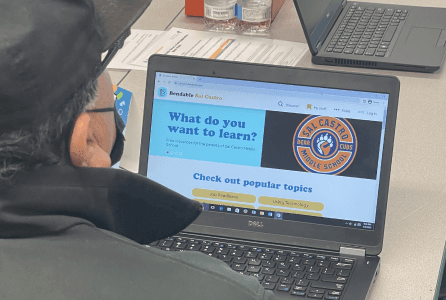
We piloted this concept during the spring at the parent center at Sal Castro Middle School in Los Angeles. Once center-goers signed up for a Bendable account, they were able to find free learning content in areas that matter to them most: work skills, personal technology, financial literacy, well-being and effective parenting.
Although users can access Bendable on any device at any time, we are mindful that learning is social. And so part of our offering now includes discussion guides that can be used to run workshops on a variety of topics, allowing participants to learn with each other and from each other. At Sal Castro, for instance, it was wonderful to see school staff lead a lively and informative conversation after parents went on Bendable together to watch a short video about helping children cope with social anxiety.
For schools, Bendable is a powerful way to engage parents and pull them onto campus, which in turn helps to drive student outcomes. Indeed, a large body of research has found that parents’ involvement at school leads to increased achievement, positive attitudes and persistence to graduation by their children.
More broadly, we know that lifelong learning is good for mental well-being and self-esteem, can help people gain practical skills and can connect them to like-minded individuals who share a passion. For seniors, research has shown that lifelong learning helps to prevent the onset of dementia, sharpens alertness, stimulates new neural connections, promotes socialization and improves memory function and cognition.
By late 2023, following our successful pilot at Sal Castro, we began developing relationships with other schools in multiple districts, and we have since been in discussions with public and nonprofit job centers, youth centers, family centers and senior living communities about how Bendable can help meet the needs of those they serve. We look forward to Bendable expanding into all of these new contexts in 2024.
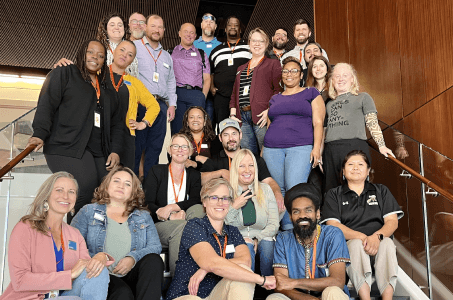
We also continued our school-related work in 2023 through the Harbor Freight Leadership Lab, which brings together individuals from across the nation’s K-12 skilled trades education ecosystem. During the year, HFLL’s 22 participants—the third and final cohort in a three-year pilot—met online and in person to acquire practical management and leadership tools that can help boost their careers, all with an eye on elevating the skilled trade sector’s performance, prestige and standing in society.
A third-party evaluation found that the lab deepened participants’ “enthusiasm for their work,” promoted “out-of-the-box thinking,” “shaped transformational ideas” and “played a vital role in helping participants navigate the STE landscape, offering valuable advice...and connections to key resources.”
Late in 2023, with the pilot complete, we started planning for a fourth HFLL cohort and began envisioning with our partners at Harbor Freight Tools for Schools and the Smidt Foundation what the next iteration of the lab will look like.
Also on the K-12 front, we worked with Menlo Education Research to design and develop an organizational and knowledge-sharing structure that would engage members of the Advancing Innovative Math Solutions (AIMS) Collaboratory. This community of practice is composed of cross-sector teams committed to lifting up mathematics education, particularly for students of color and students affected by poverty. The project, which included 57 organizations in 2023, is funded by the Bill & Melinda Gates Foundation.
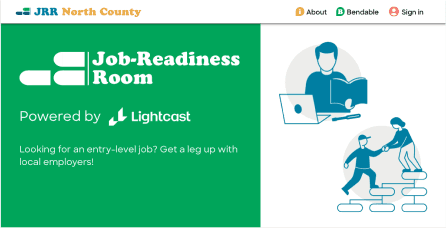
In June, we wrapped up a 10-month pilot of the Job-Readiness Room, a library-based workforce development program that we designed and implemented in north San Diego County with the labor market analytics firm Lightcast and the City of Carlsbad’s Department of Innovation & Economic Development. More than 150 individuals signed up for the JRR, which provided 15 hours of entry-level job-readiness training through an online platform made available by the Carlsbad City Library.
Although we and our partners decided not to extend the program beyond the pilot stage—primarily due to a lack of firm commitment by local employers—we learned many lessons that have informed our thinking around the role of public libraries in workforce development and that will be valuable as we pursue new opportunities in this area. Among these are the need for job seekers to be fully supported by learning coaches and career navigators during their journey, and for local hiring managers to co-design any skills-based hiring system so that it truly meets their needs.
Finally, we worked with the Drucker Institute to perform and interpret the calculations that make up its annual company rankings and serve as the basis of The Wall Street Journal’s “Management Top 250” list—all part of an effort to encourage major U.S. corporations to move away from putting the interests of their shareholders ahead of those of their workers and other stakeholders. Tech companies dominated the 2023 rankings, with Microsoft at No. 1, followed by Apple, Nvidia, Alphabet and IBM.
As part of our work, we published several stories in the Journal throughout the year, including a look at how companies that had an executive devoted to diversity, equity and inclusion scored higher in the rankings than did their peers without a DEI officer.
All of our operating expenses for 2023—$1.9 million—went toward furthering our social purpose.